Overview
My Role: Lead designer, discovery through high-fidelity prototypes
Team: 1 PM, 1 co-designer, 6 engineers
Users: Due Diligence coordinators, Risk Analysts, Transaction Monitoring, Data Security
Context
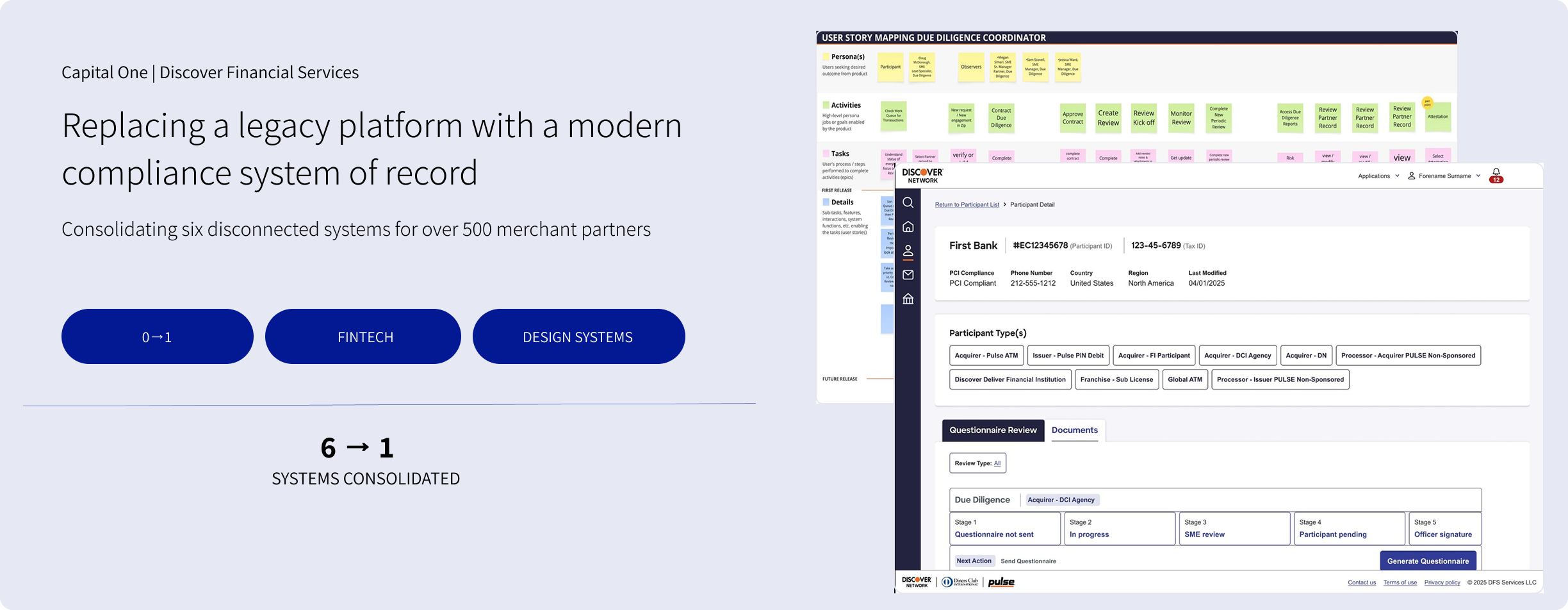
The goal was to replace a decade-old eCredit system and its ancillary supporting applications with a modern Risk Partner System of Record. There was no existing design system, and data integration was required across six different legacy systems.
The Problem
The Problem
Research surfaced a clear key finding: coordinators spent more time finding data than analyzing it.
"Sometimes I have to click through a bunch of screens or search across applications to find the document needed to conduct a review." — Due Diligence Analyst
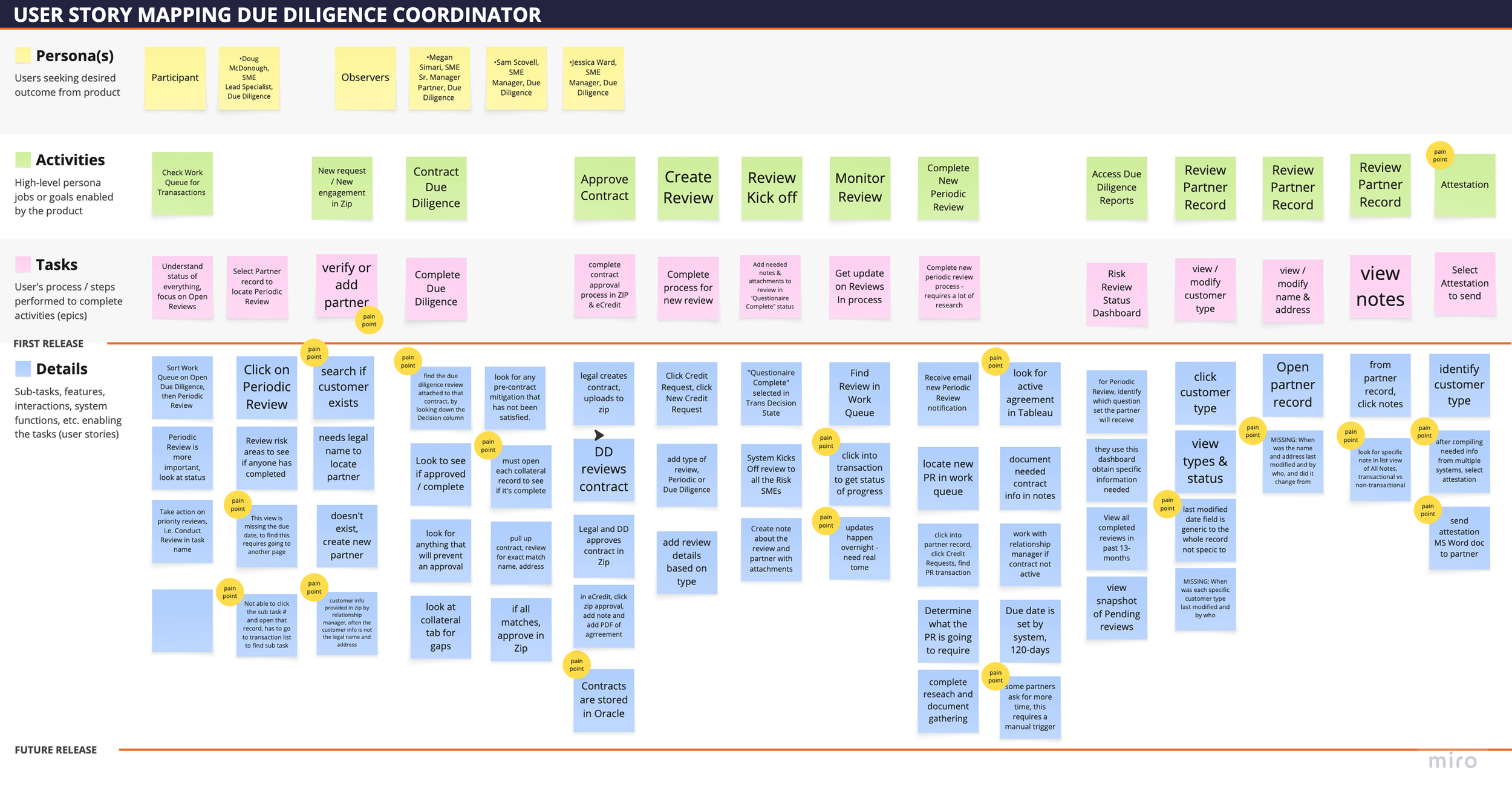
Research conducted: 12 moderated UserZoom interviews; workshops on persona, user story mapping, and prototyping.
Pain points
Information stored across many systems
Filtering/searching doesn't work as expected
Not updated in real time
Review tracking nearly impossible
Documentation scattered everywhere
Design Evolution
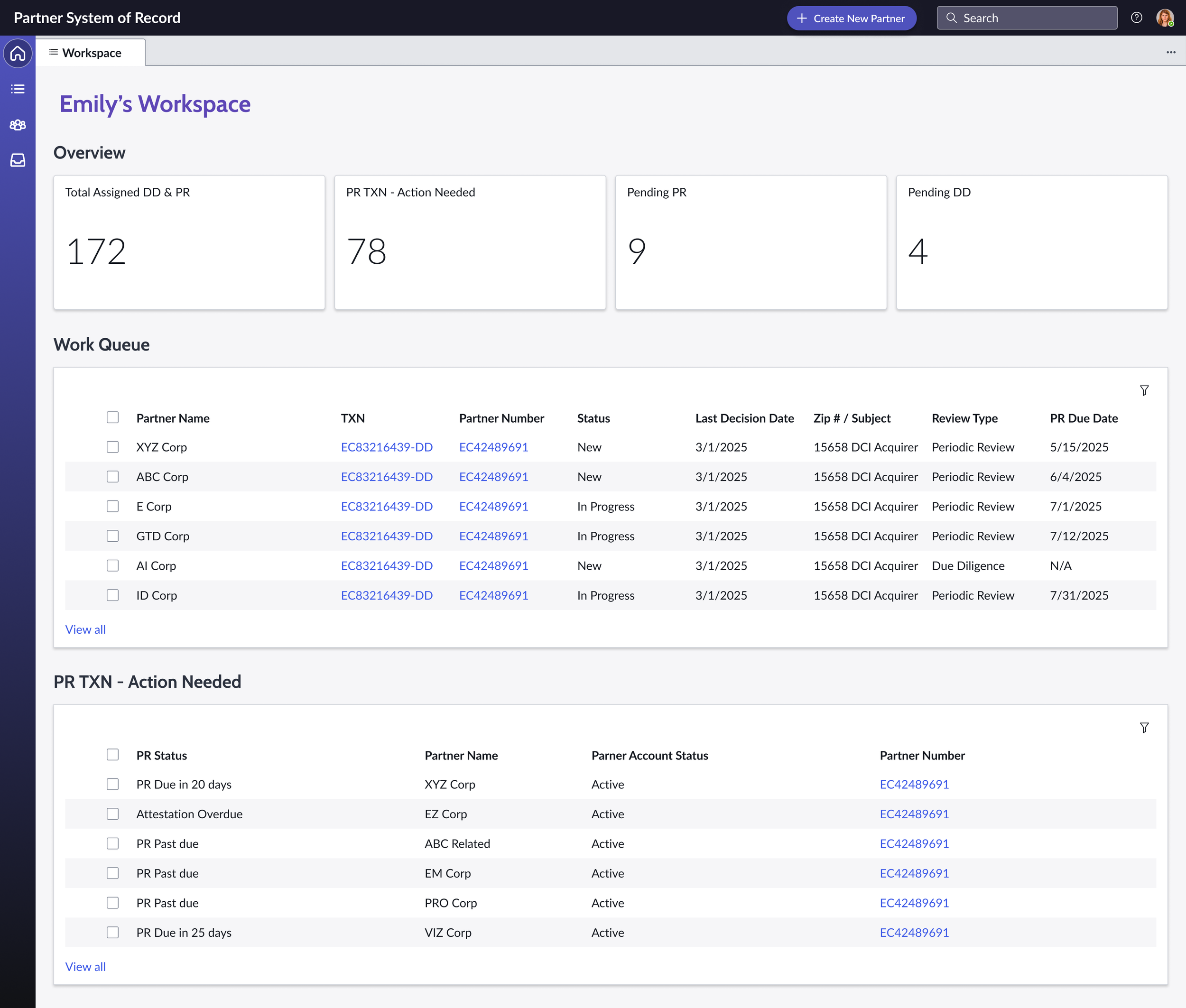
The initial concept was a multi-document interface (MDI) with a persistent tab system, closer to the legacy experience but carrying less content.
Trade-offs
Similar experience to legacy with less content
Too many windows (browser-like approach)
Needed more integration
Learnings
Review "templates" needed to be more seamless
Messaging needed additional scoping
Greater priority was questionnaire previews
Design Solution: Participant Detail
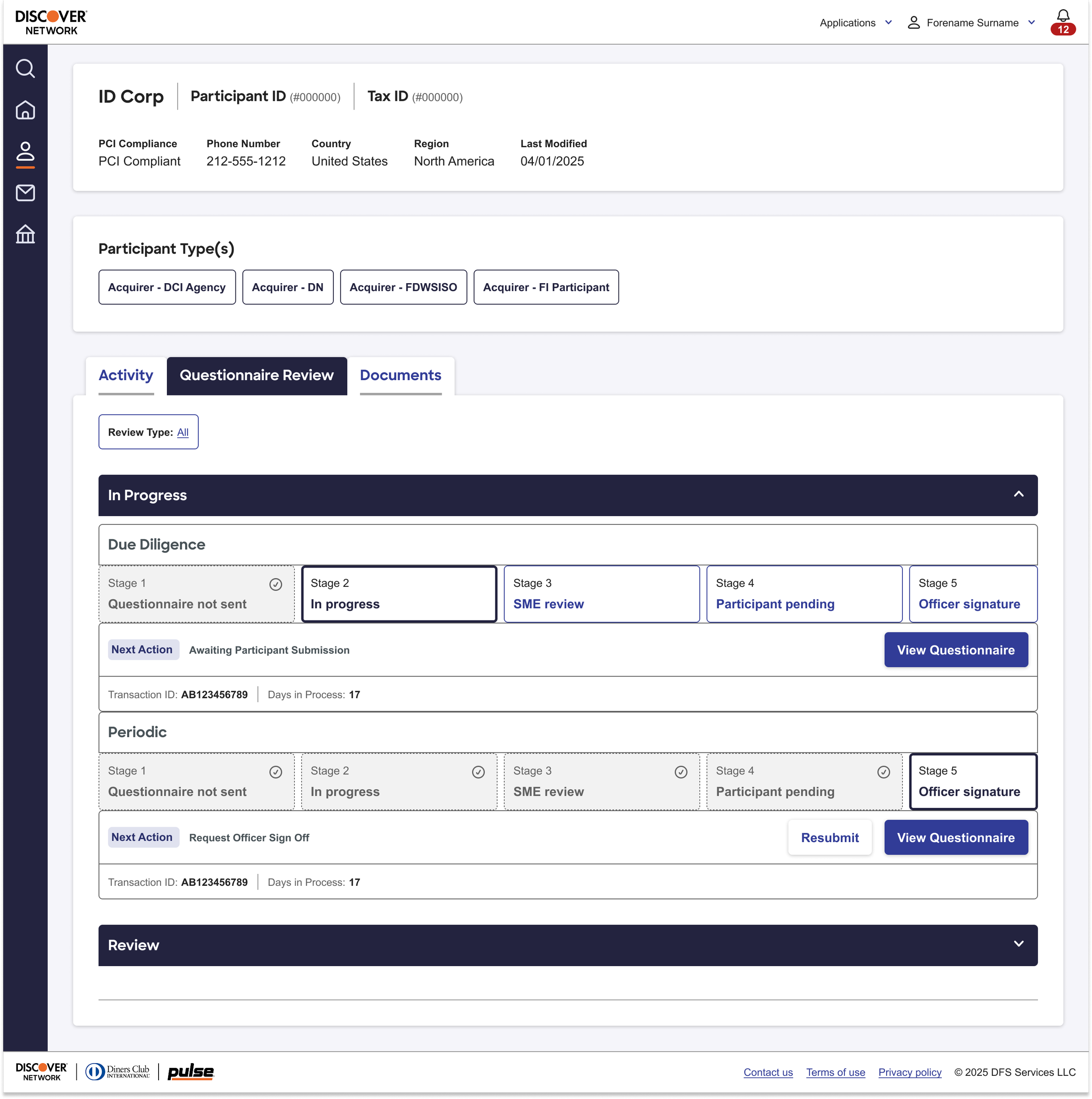
I designed the Participant Detail page as the core unit of the platform.
Visual hierarchy — card structure
Surfaces the most important participant information
Supports up to 17 participant types
Embedded tabs
Questionnaire Review — action-needed states, CTAs, and stage tracking
Documents — a log of all materials related to the participant, including SOWs and contracts
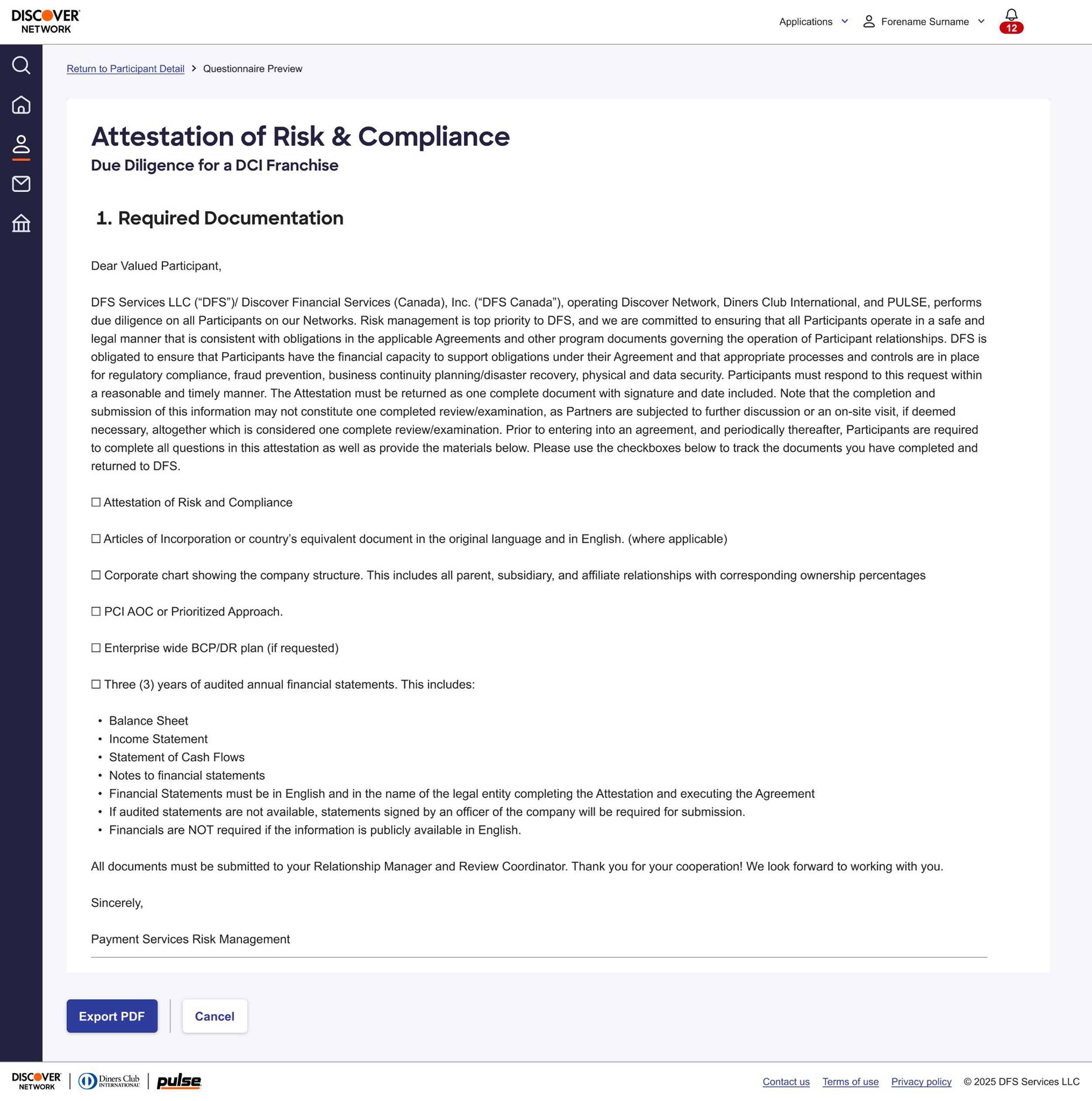
Generate Questionnaire flow (job to be done)
Scroll to see reviews related to the participant
Select Generate Questionnaire
Review the questionnaire documentation
Export PDF (if ready to send to participant) or Cancel (if changes are needed)
Toast confirmation
Cross-Functional Collaboration
With Product Management — weekly alignment; workshops on strategy, persona, prototype, and user-story development.
With Engineering — weekly design reviews, paired on component guidance, participated in sprint planning.
With Leadership — monthly VP/Director presentations, managed phased expectations, advocated for the design system need.
With Users (Research) — three fidelity rounds and three iteration cycles: 10 stakeholders (low-fi), 8 coordinators (med-fi), 12 users total (high-fi).
What Shipped / Impact
The platform shipped with participant detail pages, review management, and a document repository.
Consolidated six disconnected tools into one application serving 500+ partner organizations
Streamlined coordinator workflows
Improved review tracking and visibility
Set up the sunset of the legacy eCredit system
Became the foundation for additional Payments products
Reduced operational friction and enhanced compliance capabilities
Reflections
What worked: research prevented the team from building in the wrong direction; close partnership with product and engineering kept scope grounded.
What I'd change: discuss the technical aspects of messaging sooner (it was ultimately eliminated); clarify "technical debt" with engineering earlier; partner with the adjacent design team sooner.
What I learned: always clarify technical feasibility; "must haves" aren't always must haves; this project led directly to a broader systems effort.